App costs · honestly calculated

What does an app cost?

The first question is almost always the same: are we talking three figures or five? It depends on what the app needs to do — and that's exactly what we'll work out here. No blanket promises, no '€99 and up' bait numbers. I build apps myself and have some in the App Store. So I'll tell you honestly what yours will cost.
The short answer

The short, honest answer

WebApp / PWAlow–mid four figures
Focused iOS appmid four figures
iOS + Android or with backendhigher accordingly
Developer accounts (one-time)Apple €99/year · Google Play €25 once

I don't work with shop-window prices. But so you have a ballpark, the realistic starting points are on the left.

These are starting points, not quotes. What your app costs depends on the five things below — and in a first call I estimate the effort and tools transparently. What I won't do: name you a number before I know what you need.

THE 5 COST DRIVERS

What the price really depends on

01

Platform

iOS, Android or both? Each platform is its own work — 'both native' is almost double the effort. A WebApp runs everywhere from one codebase. Often the smarter start.
02

Scope

Login, push, payments, maps, offline — every feature is build time. Five screens are a different project than forty.
03

Backend

Does the app just store data locally, or does it need a server, user accounts, an API? The invisible part behind the app is often half the work.
04

Design

Template looks come cheap. A distinctive, well-thought-out interface people actually enjoy using is handcraft — and often what decides whether an app gets used at all.
05

Maintenance

An app isn't a piece of furniture. iOS and Android change every year — without updates it goes stale.
THE PROOF

Apps I've built

Most app providers show you a wall of corporate logos. I'd rather show you what I've built and shipped myself. Tap to open the case study.
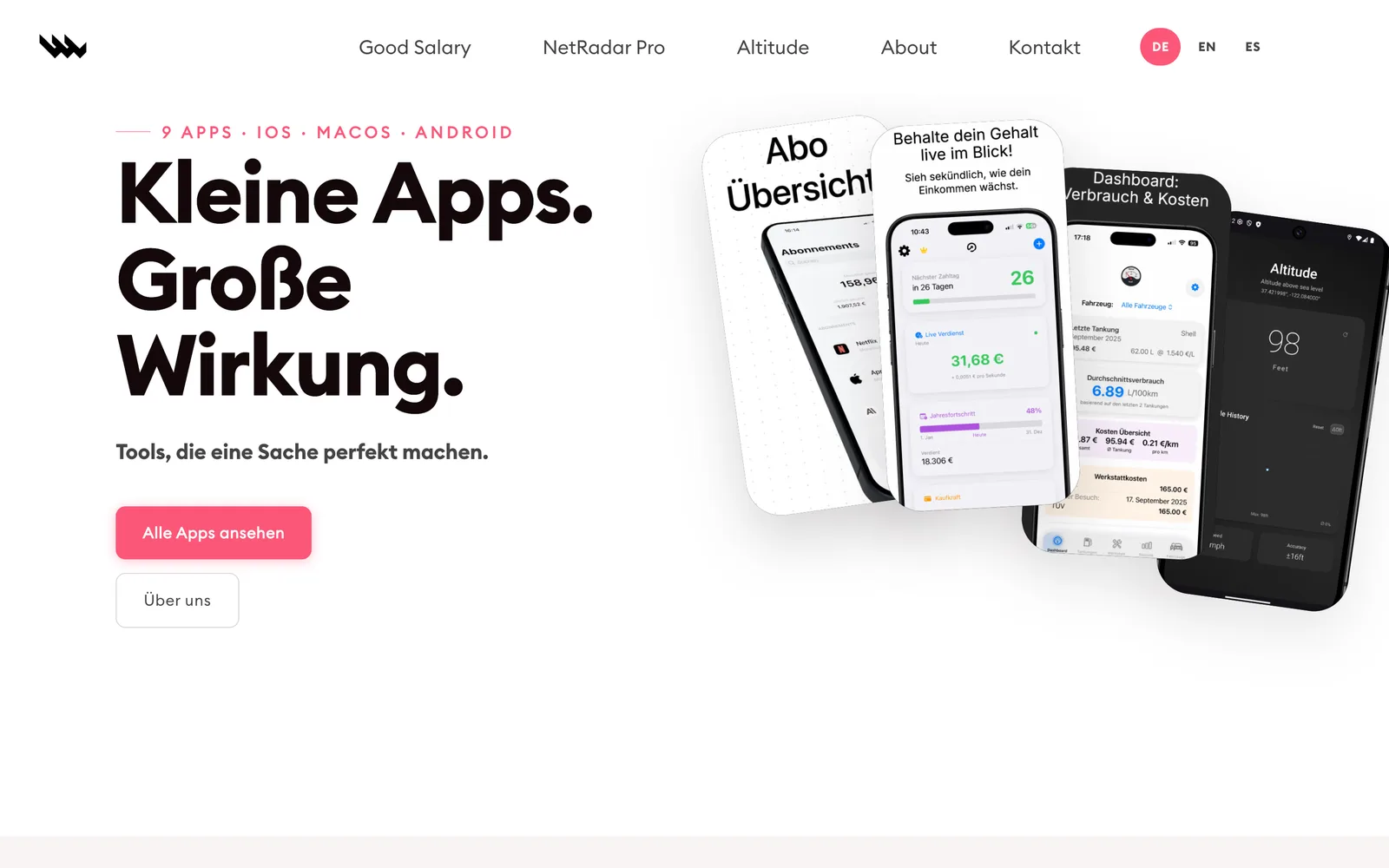
wwwery – good apps
9 own iOS apps · App Store
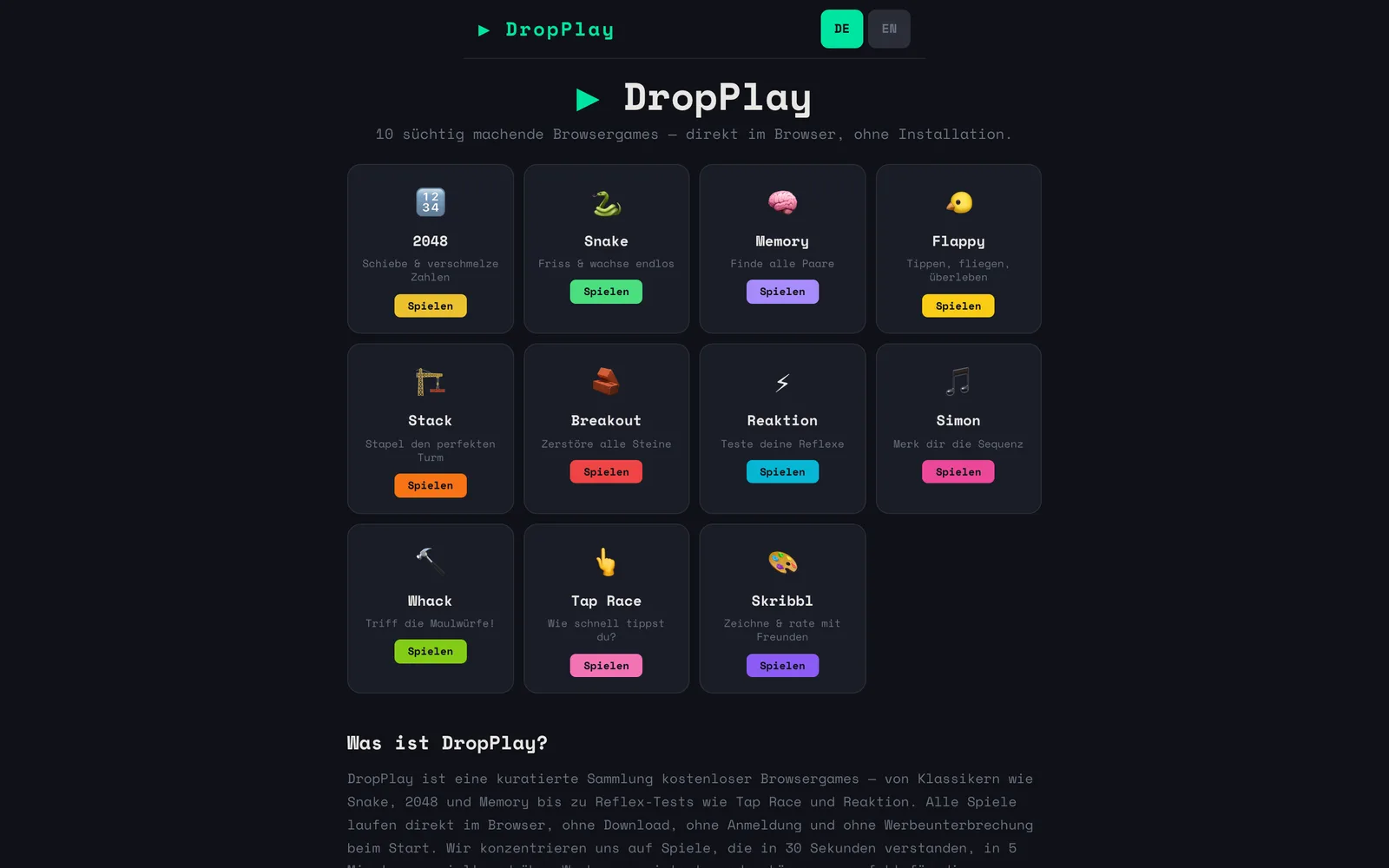
dropplay
WebApp · several mini-games
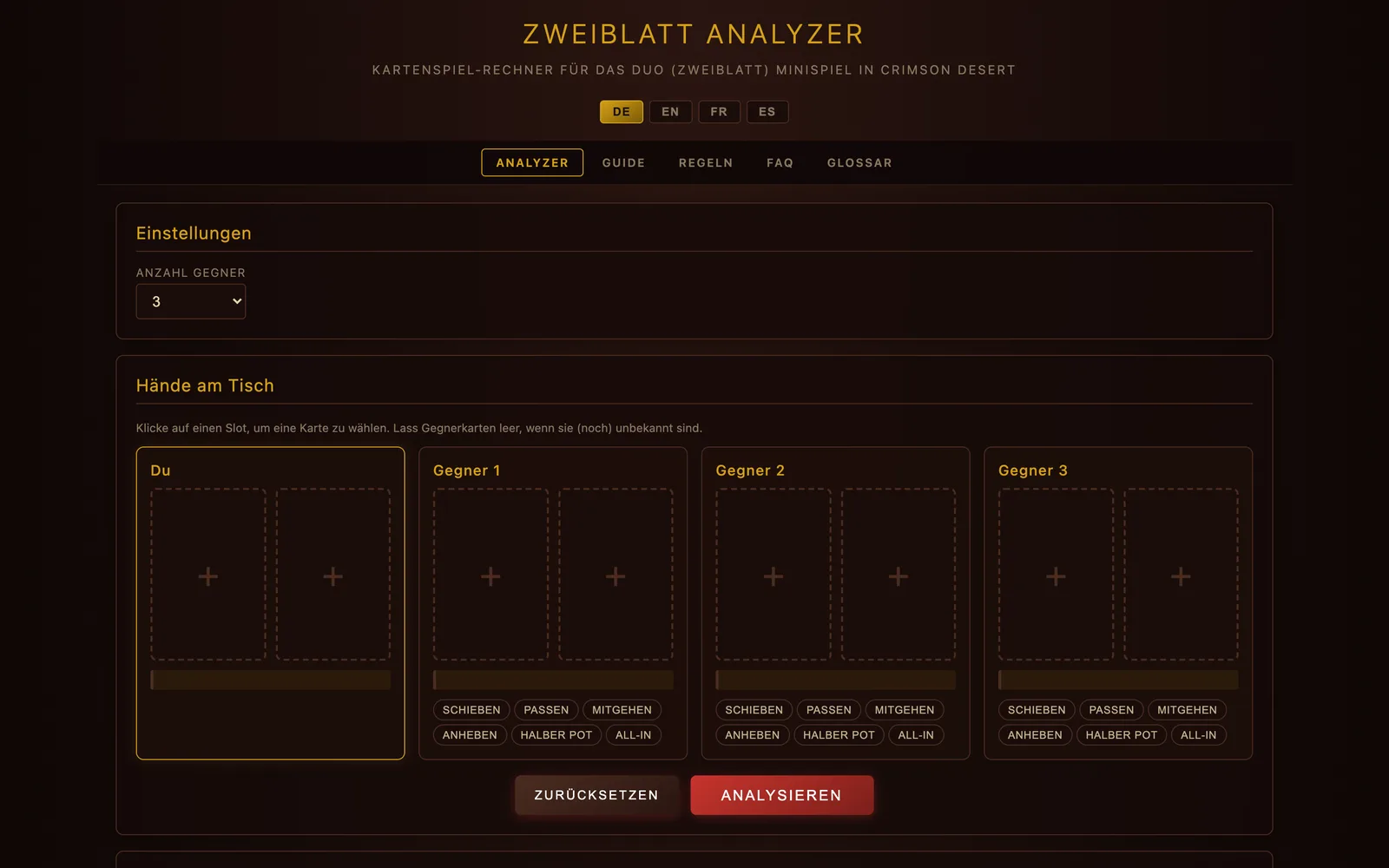
duo-analyzer
Tool · organic search traffic
PLATFORM CHOICE

Do you even need a native app?

WebApp / PWA — cheapest start
iOS native — speed & store presence
Android native — more reach
Both native — almost double the budget
Often the smartest choice: start with the WebApp

WebApp / PWA runs in the browser, is installable, needs no store approval and just one codebase for all devices. The fastest and cheapest way to test an idea — dropplay is exactly that.

iOS native when you need camera, sensors, offline speed or real store presence. Android native brings more reach, but more device and version variety — more testing. Both native deliver top quality on every device, but cost almost double the budget.

My honest advice: if your offering gets used regularly or should be findable in the App Store, an app is worth it. For everything else a website is often enough — and sometimes we combine both.

WHO BUILDS IT

Agency, freelancer or website builder?

Builder — cheap, fast, generic
Big agency — power, but overhead
Me — you talk directly to the person building it
No markup for an admin apparatus
Everything from one hand, made in Oberursel

A website builder (DIY) is cheap, fast and generic — good for a first test, rarely for a serious product. A big agency has plenty of power for corporate projects, but layers of account managers, overhead, and your project is one of many.

With me you talk directly to the person who builds it. No call center, no ticket system, no markup for an admin apparatus. From the first concept to the App Store release — everything from one hand, made in Oberursel. If you need twenty developers at once, I'm the wrong choice. For well-thought-out apps and MVPs, the right one.

RUNNING COSTS

What does an app cost per year?

Apple Developer — €99/year
Google Play — €25 once
Server / backend — depending on load
Maintenance & updates — by effort or retainer
No fixed package with dead hours

The build is part one. Counted fairly, you add developer accounts (Apple €99/year, Google Play €25 once), a server or backend if needed, and ongoing maintenance: adapting to new iOS/Android versions and bug fixes — by effort or as a retainer.

Like with my websites: no fixed package with dead hours. You pay for real work. Anyone who hides the running costs is selling you a ruin in installments.

WHY WITH ME

I don't just talk about apps — I have some in the store

Shipped, not claimed
From idea to store — on my own
For every app I can show you how it's built

Most app providers show you a wall of corporate logos. I'd rather show you what I've built and shipped myself. Because that's exactly what you need: someone who takes an idea from zero into the store.

In short: shipped, not claimed. For every one of these apps I can show you exactly how it's built.

Frequently asked questions

What does a simple app cost?
A focused iOS app starts in the mid four figures; a WebApp or PWA is cheaper. What your app costs depends on platform, scope, backend, design and maintenance — in a first call I estimate the effort and tools transparently.
Do I need an app or a website?
If your offering gets used regularly or should be findable in the App Store, an app is worth it. For everything else a website is often enough — and sometimes we combine both. A WebApp or PWA is often the fastest and cheapest start.
How long does development take?
4 to 12 weeks, depending on scope. A focused MVP often in a few weeks, larger apps accordingly longer. After the first call I'll give you a realistic estimate.
What does an app cost per year?
The Apple Developer account costs €99/year, Google Play €25 once. On top come server or backend costs depending on the project, plus ongoing maintenance — by effort or as a retainer.
Is a WebApp worth it instead of a native app?
Often yes. A WebApp or PWA runs in the browser, is installable, needs no store approval and just one codebase for all devices — the fastest and cheapest way to test an idea. A native app is worth it when you need camera, sensors, offline speed or real store presence.
iOS or Android first?
Usually iOS: one consistent system, a purchasing-strong audience, clean development. Android brings more reach, but more device and version variety and therefore more testing.

Sounds like your idea?

Start a project
Tell me in two or three sentences what you have in mind. I'll tell you honestly what's realistic — even if the honest answer is 'start with a WebApp first'.